

16 Mar How Maritime Shipping is Getting Smarter in 2026
The maritime world is gearing up for a major shift. Recent industry analysis highlights four big trends that are already gaining momentum. Vessels are being managed with long-term strategy in mind, not last-minute solutions. Smarter data use, lifecycle planning, and flexible fuel strategies are quickly becoming essentials as ships get more complex and regulations evolve.
For the industry, this means 2026 is heading toward smarter operations and that shift is what will unlock better insights and better performance.
A Resilient Industry Embracing Transformation
“In 2025 the maritime industry once again shone brightly, showing its fierce resilience and relentless ingenuity,” notes Roger Holm, President of Wärtsilä Marine. The industry has continued facing global challenges head-on, taking significant steps in digitalisation, sustainability, and cross-industry collaboration.
Vessel owners and operators are making bold decisions that will shape a cleaner, smarter future for shipping. Four interconnected trends are driving this transformation.
Turning Data into Operational Intelligence
Beyond Basic Reporting
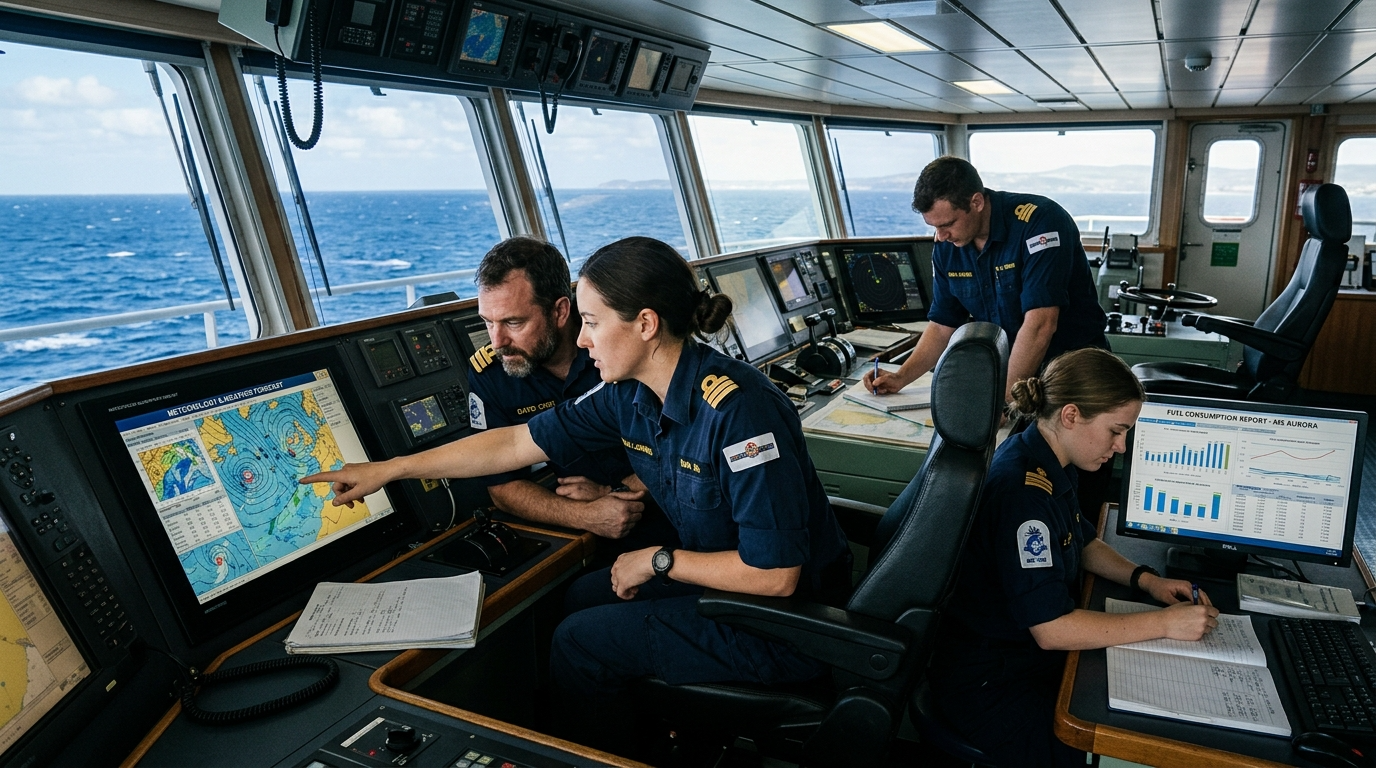
Modern vessels generate enormous amounts of data from hybrid setups and power management systems to alternative fuel handling. Yet for most operators, this data remains underutilized. While generic noon reporting suffices for routine decisions, enterprise-level analytics could deliver far greater value.
Leading operators already use data for onshore trend forecasting and cost reduction. The next evolution is systematic, continuous analysis providing real-time operational recommendations directly to crews.
Future implementations may include onboard analytics delivering actionable insights. Imagine combining power management data with weather forecasts to generate real-time propeller RPM recommendations translating immediately into measurable fuel savings.
Investment Decisions Without Guesswork
Data analytics removes uncertainty from capital decisions. Digital vessel modeling can simulate how tightening regulations or new energy-saving equipment will perform, guiding investment prioritization across fleets.
Challenges remain around governance, data ownership, cybersecurity, and system integration. Despite these barriers, pioneers like Norwegian Cruise Line Holdings demonstrate what is possible through real-time voyage optimisation and emissions tracking.
Markus Mannevaara, Director of Fleet Optimisation at Wärtsilä, acknowledges barriers: “The cost of installation and integration continues to be a blocker for many businesses when it comes to investing in IoT equipment and big data.” He recommends starting incrementally with AI-powered predictive maintenance, then progressing to voyage optimisation, with each step delivering progressively bigger cost savings.
Building Flexibility into Decarbonisation Plans
Why Commercial Viability Matters
Decarbonisation paths vary dramatically by vessel type, operational patterns, and fuel availability. The universal principle is that solutions must make commercial sense. There is no one-size-fits-all approach, making flexibility essential.
Effective strategies involve three phases:
- Planning, including selecting engines, energy-saving devices, and carbon capture systems
- Installation and integration
- Ongoing monitoring to ensure targets are met
Designing for Uncertain Futures
Twenty years ago, newbuild technology remained viable for two decades with proper maintenance. Today the certainty is different: whatever technology you install now will likely be outdated within 20 years.
This creates difficult questions. How much should be spent on current technology versus reserving funds for future upgrades? How much space should be allocated for carbon capture systems, rotor sails, or alternative fuel infrastructure?
The answer is to build flexibility into design from day one. Start with a realistic fuel transition roadmap. Fuel-flexible engines maintain relevance as fuels evolve from diesel and LNG to bioLNG and methanol. Integrate hybrid systems where feasible, and ensure adequate space for future equipment additions.
Grant Gassner, Director of Integrated Systems and Solutions at Wärtsilä, emphasizes: “Flexible decarbonisation strategies require rigorous planning in the vessel design phase, looking across a wide range of potential technological solutions. Fuel-flexible engines mean you can switch to methanol, ammonia, LNG and bioLNG as soon as it makes economic sense.” Hybrid electric propulsion systems provide an ideal foundation for adaptable, future-proof propulsion trains.
Managing Vessels Across Their Entire Lifespan
Performance Matters More Than Age
Traditional fleet renewal focused on vessel age. That is changing. Well-maintained older ships with strategic upgrades can outperform neglected younger vessels.
Lifecycle optimisation takes a holistic view, balancing environmental impact, operational efficiency, and economic viability from design through retirement. Different segments have different priorities: ferry and offshore operators maximize uptime, while tanker charterers minimize fuel costs.
Success requires transparency and data sharing between owners, operators, and OEMs. As carbon taxes increase, collaborative relationships built on data sharing become more valuable than transactional interactions.
Services That Enable Planning
In uncertain markets, services providing planning clarity are increasingly valuable:
- Dynamic maintenance planning optimizes timing of engine maintenance and overhauls
- Digital fleet optimisation reveals improvement opportunities across entire fleets
- AI-enhanced predictive maintenance catches problems early with timely recommendations
- Simulation modeling demonstrates how upgrades affect total cost of ownership
Jesper Bonde, Director of Agreement Product Management at Wärtsilä, explains: “Optimising your vessel lifecycle over 20–30 years can be challenging in a world where regulations and technology evolve rapidly. That is why having a clear, well-structured plan is essential.” Lifecycle agreements let owners focus on priorities while receiving expert guidance based on real operational data, including upgrade recommendations with clear ROI.
Preparing for Evolving Compliance Requirements
Direction Remains Clear
The IMO Net-Zero Framework one-year delay created uncertainty, but the fundamental direction is unchanged. Regional initiatives like the EU Emission Trading System and FuelEU Maritime regulation affect 15 to 20 percent of global shipping. Customer pressure across cruise, ferry, container, and offshore segments drives decarbonisation on thousands of vessels.
Regulatory unpredictability creates hesitation, perpetuating the infrastructure-versus-vessels impasse. Regulations that make alternative fuels economically competitive can break this deadlock, triggering accelerated development and infrastructure rollout, as seen in onshore energy markets.
Meanwhile, businesses prepare by increasing fuel flexibility, positioning for complete transition when economics favor alternative fuels.
Robust Reporting is Essential
New regulations demand proof of compliance. Businesses need robust protocols for carbon tax management and regulation-related costs. Solutions like compliance and reporting modules covering CII, FuelEU Maritime, and EU ETS provide vessel emission dashboards and scenario planning, helping operators adjust to ensure year-end compliance.
Peter Hanstén, Director of Business Development at Wärtsilä, advises: “The best way to prepare for tightening regulations is to start reducing emissions now. If we leave out carbon capture, this basically means using less fuel.” Energy-saving technologies can reduce fuel consumption by up to 10 percent, while hybrid propulsion systems optimize engine load.
The Path Forward: Collaboration and Innovation
Roger Holm frames the future: “In 2026 collaboration will play a vital part in driving the sustainable transformation of shipping and shaping a cleaner and smarter future for the maritime industry.” Wärtsilä leadership in fuel flexibility, integration, and cross-industry partnerships reflects the growing need for OEMs, operators, ports, fuel providers, and regulators to work together.
The maritime industry stands between regulatory uncertainty and the certain need to decarbonise. Lifecycle optimisation and flexible strategies position operators to handle whatever emerges.
Key Insights
- Data analytics are becoming essential competitive differentiators for fleet operations
- Flexibility in decarbonisation is critical because no universal solution exists
- Lifecycle planning replaces short-term reactive management
- Regional regulations drive progress despite global framework delays
- Fuel-flexible engines and hybrid systems provide crucial adaptability
- Industry collaboration accelerates sustainable transformation
Maritime Utilia Services
Maritime Utilia supports organizations navigating industry transformation:
Source: Analysis based on Wärtsilä Marine insights, From Big Data to Lifecycle Optimisation: 4 Trends That Will Affect Shipping in 2026
Expert Contributors: Roger Holm, Jesper Bonde, Grant Gassner, Markus Mannevaara, Peter Hanstén

No Comments